
Every beekeeper starts somewhere, usually with a nervous glance at a hive and the sense that everyone else knows what they're doing. They don't. We've trained more than 500 people through our courses at the Wiltshire apiary, and almost all arrived knowing nothing.
Is beekeeping right for you?
Beekeeping suits patient people more than brave ones. You don't need nerves of steel, just a willingness to move slowly, watch closely, and accept that the bees are always, always in charge.
A few honest questions worth asking yourself first:
- Do you have outdoor space, even a modest garden or allotment, that isn't overlooked by a busy footpath?
- Are you reasonably comfortable being near insects, even if you're not thrilled about it yet?
- Can you commit to regular hive checks through spring and summer, not just when it's convenient?
- Are you doing this for honey, for the bees themselves, or both? Both is fine. Most of us are.
If you nodded along to most of that, you're probably ready to think seriously about it and you can read more about Our Humble Beekeeper. If you're still unsure, taster days and courses are for that.
The time commitment
Beekeeping has a season, and it isn't light. From spring through late summer, expect a hive inspection every seven to ten days, each taking thirty minutes to an hour once you're confident.
Winter is quieter. The bees cluster together for warmth and largely look after themselves, so your job becomes occasional monitoring rather than hands-in-the-hive work.
Essential equipment
You don't need much to begin, but what you need matters. Buying second-hand is common in beekeeping circles, though we suggest getting your first hive new so you know its history.
The basics:
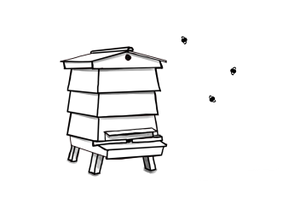
- A hive (a National hive is the standard UK choice for beginners, straightforward to source parts for)
- A bee suit or jacket with veil, properly fitted, not borrowed and baggy
- Gloves, though many experienced keepers eventually go without
- A smoker, to calm the bees during inspections
- A hive tool, for gently prising apart frames
- A colony of bees, which deserves its own section below
Budget for the initial setup properly. It's a bigger outlay than people expect, and buying cheap kit you'll replace within a year rarely saves money.
Finding your hive location
Bees are adaptable, but a thoughtful spot makes life easier for everyone, yours and theirs.
Look for:
- Morning sun, so the colony gets going early in the day
- Shelter from strong prevailing wind
- A flight path that doesn't cross directly over a neighbour's washing line or your child's trampoline
- Reasonably level, well-drained ground
Our 130 hives sit across the Wiltshire countryside, many bordered by wildflower planting we've added to give the bees more to forage on. You won't need that scale; a modest garden with decent flowering plants nearby will do.
Getting your first bees
There are three common routes in:
- Buy a nucleus colony (a small, established mini-colony with a laying queen) from a reputable, local breeder. This is the route we recommend most to beginners.
- Join a local swarm collection list. Free, but unpredictable, and not something we'd suggest as your very first experience.
- Ask your local beekeeping association. Most run mentorship schemes pairing new keepers with someone experienced nearby, genuinely invaluable in year one.
Whichever route you choose, buy from someone who can answer questions honestly about the colony's temperament and health. A good breeder wants your bees to thrive as much as you.
Beekeeping has a rhythm, and once you feel it, everything gets less daunting.
- Spring: The colony wakes up and expands quickly. Regular checks begin, and swarm prevention becomes your main job.
- Summer: Peak activity. Weekly inspections, potential honey harvest depending on the flow, and the busiest stretch of your year.
- Autumn: Preparing the colony for winter, checking food stores, treating for pests.
- Winter: Largely hands-off. Occasional checks on weight and activity, and a lot of well-earned reading up for next year.
Take a Beeble course
If everything above sounds appealing but still a little abstract, that's what our beekeeping courses are for. Run at our Wiltshire hives with The Idler, they're hands-on, unhurried, and built for complete beginners, no prior experience assumed.
Curious where to start? Explore our beekeeping courses, read more on the Bee Blog, or find out more about our approach to ethical beekeeping and sustainability. Life is sweet, especially once the bees are on your side.