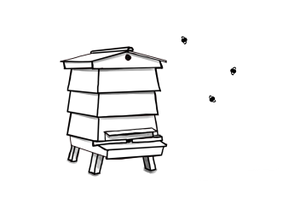

We spend a lot of time with bees. Every morning at our Wiltshire apiary, we're suited up, checking on 130 hives, watching the colonies move with a kind of quiet, collective intelligence that never gets old. And the more time you spend around bees, the more you understand why their importance to life on this planet is not a gentle environmental talking point. It's a fact as solid as the ground beneath the hive.
So let's talk about it.
What Bees Actually Do
At the most fundamental level, bees are pollinators. They carry pollen from flower to flower as they forage, fertilising plants in the process. Without that transfer, the majority of flowering plants cannot reproduce. It sounds simple. The consequences of losing it are anything but.
Think of the bee as the quiet engine that keeps the natural world turning. No single creature does more, hive for hive, wing-beat for wing-beat.
Pollination and Food Supply
Approximately one third of the food we eat depends, directly or indirectly, on pollination. That's not a rough guess; it's a well-established figure repeated by ecologists and food scientists alike. We're talking apples, almonds, berries, courgettes, coffee, and much more.
Our Wiltshire honey comes from bees visiting wildflowers, fruit trees, and hedgerow blossoms across the Cotswolds countryside. When guests come to the hives and taste honey straight from a frame, they're tasting the entire local landscape.
What Would Happen Without Bees
Without bees and pollination, entire ecosystems begin to unravel. Wild plant species that depend on pollinators would decline. Animals that feed on those plants would follow. The knock-on effects move fast and far.
For farming in the UK, the picture is stark. Many crops would need to be pollinated by hand, labour-intensive, expensive, and simply not scalable. Yields would fall. Prices would rise. Some crops would disappear from the market entirely.
The Scale of the Crisis
Bee populations globally have been under pressure for decades. Managed honeybee colonies in the UK and across Europe have seen significant losses in recent years, and wild bee species face even sharper challenges.
Approximately a quarter of Europe's wild bumblebee species are thought to be at risk of extinction, though scientists continue to refine these figures as monitoring improves.
What's Causing Bee Decline
The pressures on bees are well-documented, and they don't operate in isolation, they compound:
Habitat loss. Wildflower meadows in the UK have declined dramatically since the mid-twentieth century, leaving bees with far less to forage.
We manage these challenges at our Wiltshire hives every season. It's one reason we only harvest honey when the colony genuinely has surplus, the bees' wellbeing comes first.
What You Can Do
You don't need 130 hives to make a difference. Plant bee-friendly wildflowers in your garden or window box, lavender, borage, and foxglove are excellent choices. Leave a patch of your garden a little wild. Bumblebees nest in tussocky grass.
Avoid pesticide use at home where possible, especially on flowering plants. Support brands and producers who take bee welfare seriously.
What Beeble Does Every Day
Beeble began with a very simple commitment: don't waste honey, and don't harm the bees that made it. That commitment has grown into something bigger.
Our 130 Wiltshire hives are managed according to ethical beekeeping principles, we harvest only what the colony can spare, we maintain a bee-friendly wildflower garden around the apiary, and we insulate hives through winter rather than leaving colonies to fend for themselves.
All of this, every drop of it, comes back to the same simple truth. Why are bees so important? Because without them, the world is poorer, in food, in biodiversity, and in beauty. And because once you've stood at a hive on a warm Wiltshire morning and watched a colony at work, you never quite look at the world the same way again.
Curious to go deeper? Explore more bee knowledge and conservation stories on our Bee Blog.